Most of us learned the true history of Thanksgiving from a construction-paper cutout: Pilgrims in buckle hats, friendly Indians, a turkey, and a pumpkin pie. One peaceful meal, and a nation was born grateful.
The real story is different. And when I hold it up next to the Word of God, and next to what I watch happen in my own city every November, I can’t celebrate it anymore. Here is why.
At a Glance
What Really Happened in 1621
The 1621 gathering at Plymouth was a harvest celebration, not a holiday. Our main eyewitness record is one short passage by colonist Edward Winslow. He wrote that the Wampanoag leader Massasoit arrived “with some ninety men,” and that they stayed and feasted for three days. Historians now say the Wampanoag were likely not invited at first. One account holds that Massasoit came with his warriors after hearing gunfire, expecting a fight, and found a feast instead.
Even the menu we copy every year is mostly myth. The Wampanoag brought five deer. Potatoes and pumpkin pie were not on the table, and Winslow never mentions turkey.
It wasn’t called Thanksgiving, either. The first recorded religious day of thanksgiving in Plymouth came two years later, in 1623, to mark the end of a drought.
The Thanksgiving Nobody Teaches: 1637
Sixteen years later, the story turned dark. On May 26, 1637, colonial militia and their Native allies surrounded a fortified Pequot village near the Mystic River in Connecticut and set it on fire. Some 700 Pequots, including women and children, were killed. Most survivors of the war were later sold into slavery.
Afterward, the leaders of Massachusetts Bay called for a day of thanksgiving in the churches for their victory over the Pequots. Historians debate how much that day connects to the holiday we keep now. But it shows what “thanksgiving” meant to the people who wrote our holiday’s origin story: thanking God for the destruction of their neighbors.
That is why, since 1970, many Native people gather at the statue of Massasoit in Plymouth every Thanksgiving Day to remember their ancestors. To them, it is a National Day of Mourning.
How a Harvest Meal Became a National Holiday
The holiday as we know it came much later. During the Civil War, in 1863, President Abraham Lincoln proclaimed a national day of thanksgiving after years of campaigning by magazine editor Sarah Josepha Hale. In 1941, Congress fixed it to the fourth Thursday of November. The cozy Pilgrim story was largely built in the 1800s to give the new holiday a founding myth.
So the holiday was not given by God. It was proclaimed by men, dressed in a story that leaves out the hardest parts.
Why I Don’t Celebrate Thanksgiving
1. God Already Gave Us a Harvest Thanksgiving
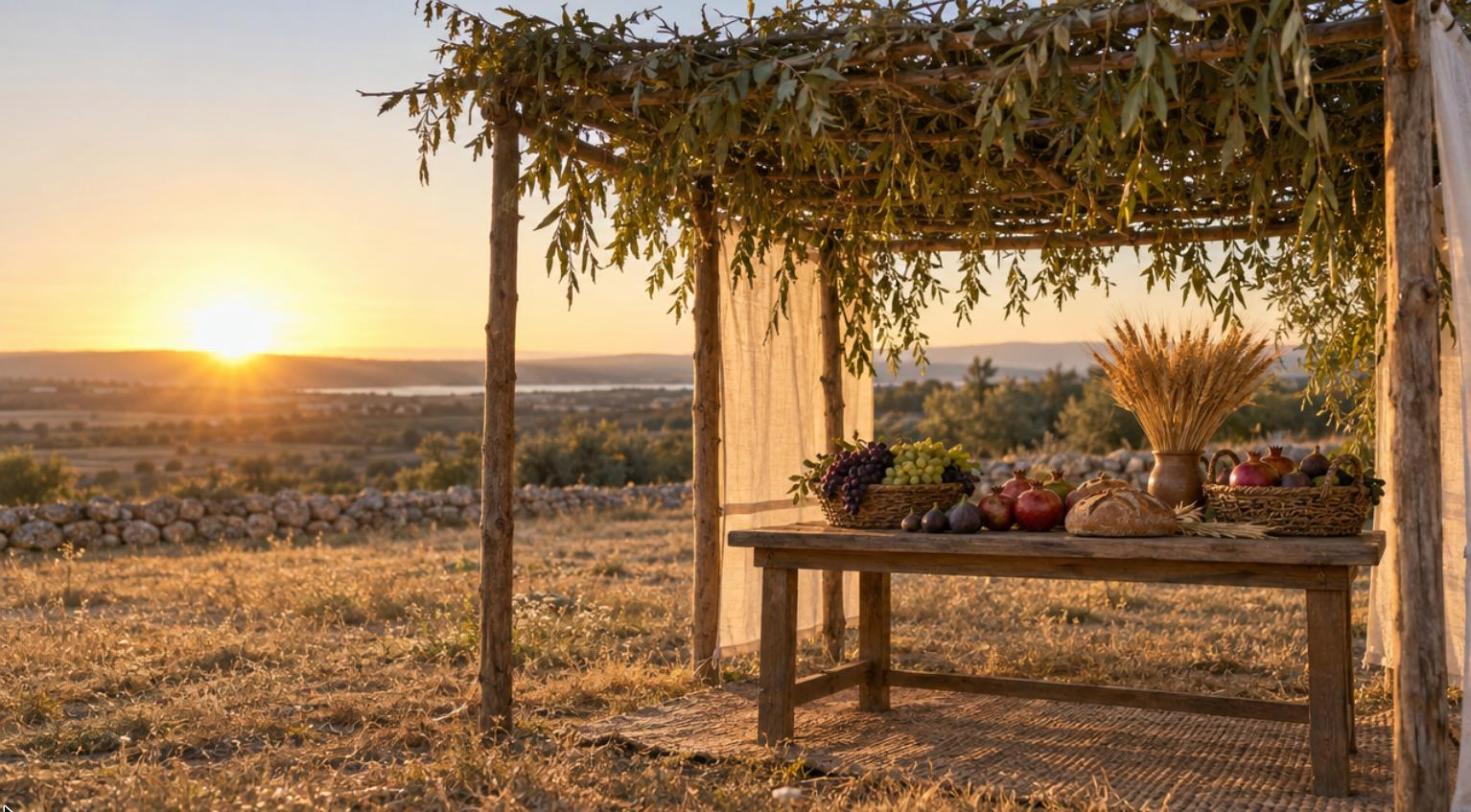
Here is what surprises most believers: God has His own harvest festival. It is called the Feast of Tabernacles, and it is one of God’s appointed times.
“Also in the fifteenth day of the seventh month, when ye have gathered in the fruit of the land, ye shall keep a feast unto the LORD seven days.” Leviticus 23:39 (KJV)
Seven days of rejoicing over the harvest, commanded by God, kept by Jesus (John 7), and promised to the nations in the age to come (Zechariah 14:16). We traded it for a Thursday set by Congress.
2. Look at Who God’s Feast Includes
This is the part that convicts me most. When God described His harvest feast, He named who sits at the table:
“And thou shalt rejoice in thy feast, thou, and thy son, and thy daughter, and thy manservant, and thy maidservant, and the Levite, the stranger, and the fatherless, and the widow, that are within thy gates.” Deuteronomy 16:14 (KJV)
The stranger. The fatherless. The widow. God’s thanksgiving was built around the people who have the least. Ours is built around how much we can eat.
3. It Has Become a Feast of Gluttony
I need to be honest about what I see here in Las Vegas every November. I watch some of the less fortunate people in our community spend everything they have on this one meal. The rent money. The light bill. The little bit that was supposed to last until the first of the month. All of it goes into one table, one day, because the culture says that is what a good family does.
I am not saying this to look down on anyone. I am saying it because I love these families, and I see the pressure crushing them. Then Friday comes, and the stores open early to sell them more.
The American Farm Bureau says a basic Thanksgiving dinner for 10 costs $58.63 this year, up 6% from 2025, with turkey driving most of the increase. That is the basic list. Most tables go far beyond it.
Scripture is plain about where this road goes:
“Be not among winebibbers; among riotous eaters of flesh: For the drunkard and the glutton shall come to poverty: and drowsiness shall clothe a man with rags.” Proverbs 23:20–21 (KJV)
Paul warned about people “whose God is their belly” (Philippians 3:19, KJV). A holiday that sends struggling families into debt for a single meal is not thanksgiving. It is the opposite.
4. Gratitude Was Never Meant for One Day a Year
“In every thing give thanks: for this is the will of God in Christ Jesus concerning you” (1 Thessalonians 5:18, KJV). A believer’s thanks is daily. We do not need a government proclamation to tell us when to be grateful.
What I Do Instead This Week
- Feed someone who can’t pay you back. Take the money you would spend on a feast and bless a widow, a single mom, or a neighbor who is struggling.
- Keep it simple. If my family eats together Thursday, it is an ordinary meal, not a spending event.
- Skip Black Friday. Don’t let the stores turn gratitude into debt.
- Mark the Feast of Tabernacles on next fall’s calendar and study Leviticus 23 and Deuteronomy 16 with your family.
- Reach out first. Call the person you have been waiting on. That is the heart of the Me 2Too Challenge.
If Your Family Celebrates Thanksgiving
I am not writing this to shame anyone sitting down with family on Thursday. Romans 14 says each person should be fully persuaded in his own mind. I am sharing where I have been persuaded. If you celebrate, tell the true story at your table, keep it simple, and make room for the stranger, the fatherless and the widow. That is the part God cares about.
This is the third post in my series on holidays and God’s calendar. Read why I am not convinced Christians should celebrate Christmas and why the Church keeps Halloween but not Passover.
Series: Holidays vs. God’s Calendar
Frequently Asked Questions
What is the true history of Thanksgiving?
The 1621 Plymouth feast was a three-day harvest celebration attended by the Wampanoag leader Massasoit and about 90 men. It was not called Thanksgiving. In 1637, after the Mystic massacre of the Pequot, Massachusetts Bay held a day of thanksgiving for the victory. Lincoln made Thanksgiving a national holiday in 1863.
Was turkey served at the first Thanksgiving?
The eyewitness account does not mention turkey. It says the Wampanoag brought five deer. Potatoes and pumpkin pie were not on the table.
What is the biblical harvest feast?
The Feast of Tabernacles, a seven-day festival after the harvest (Leviticus 23:39–43). God told His people to include the stranger, the fatherless and the widow (Deuteronomy 16:14).
Is it a sin to celebrate Thanksgiving?
Believers disagree. I don’t celebrate it because of its history, because God already gave us a harvest feast, and because of the gluttony and debt it brings. Study it and be fully persuaded before God (Romans 14:5).
Where Do You Stand?
Did you learn the true history of Thanksgiving in school? Have you seen families go broke over one meal? Tell me in the comments. And if this hit home, share it with one person before Thursday.
Keep reading: If you’re rethinking the holidays, start with the day God Himself blessed. Read The Narrow Path Has a Seventh Day: Why the Church Can’t Move God’s Sabbath.