Tag: Biblical Feasts

  • Halloween but Not Passover? The Church’s Problem With God’s Appointed Times

    Halloween but Not Passover? The Church’s Problem With God’s Appointed Times

    Every October 31, church parking lots across Las Vegas fill up with trunk-or-treat events. Costumes, candy, a bounce house. Then spring comes, the Passover arrives, and most of those same churches never say a word about it.

    That is the problem the Church has with God’s appointed times. We have made room for man’s holidays, including ones with pagan roots, and left out the feasts God Himself called His own. I want to talk about why that happened, and why it matters.

    At a Glance

    8 appointed timesGod calls them “my feasts” (Lev. 23:2)
    Jesus fulfilled themPassover, Firstfruits, Pentecost
    HalloweenTraces back to Celtic Samhain
    A.D. 325Nicaea split Easter from Passover
    Passover 2027Begins at sundown, April 21

    What Are God’s Appointed Times?

    God did not leave His people guessing about when to gather. In Leviticus 23 He laid out a calendar, and He was clear about whose feasts they were:

    “Speak unto the children of Israel, and say unto them, Concerning the feasts of the LORD, which ye shall proclaim to be holy convocations, even these are my feasts.” Leviticus 23:2 (KJV)

    Notice the words: the feasts of the LORD and my feasts. Not the feasts of the Jews. God’s. The Hebrew word is mo’edim, meaning appointed times, set meetings on His calendar. Here they are:

    • The weekly Sabbath (Leviticus 23:3)
    • Passover (23:5)
    • Unleavened Bread (23:6–8)
    • Firstfruits (23:10–14)
    • Feast of Weeks, or Pentecost (23:15–21)
    • Trumpets (23:24–25)
    • Day of Atonement (23:27–32)
    • Tabernacles (23:34–43)

    Jesus Kept His Appointments on God’s Calendar

    Here is what amazes me. Jesus did not just honor these feasts. He fulfilled them, right on schedule.

    • Passover: He was crucified at Passover as the Lamb of God (John 19:14). Paul wrote, “Christ our passover is sacrificed for us: Therefore let us keep the feast” (1 Corinthians 5:7–8, KJV).
    • Unleavened Bread: The sinless One was laid in the grave, His body without corruption.
    • Firstfruits: He rose as “the firstfruits of them that slept” (1 Corinthians 15:20, KJV).
    • Pentecost: The Holy Spirit was poured out “when the day of Pentecost was fully come” (Acts 2:1, KJV). The Church was born on one of God’s appointed times.

    The spring feasts were fulfilled at His first coming. I believe the fall feasts, Trumpets, Atonement and Tabernacles, point to His return. If God moved on His own calendar the first time, why would the Church throw that calendar away?

    Where Halloween Came From

    Now compare that to October 31. According to Britannica, Halloween traces back to Samhain, an ancient Celtic festival. People believed the spirits of the dead walked the earth that night, so they wore disguises and lit bonfires.

    In the 8th century, Pope Gregory III moved All Saints’ Day to November 1, likely as a Christian substitute for Samhain. The night before became All Hallows’ Eve. That is where the name Halloween comes from. The church did not remove the festival. It renamed it.

    Today the National Retail Federation expects Americans to spend $13.5 billion on Halloween in 2026. Costumes, candy and decorations. Meanwhile, the feast where God delivered His people by the blood of a lamb barely shows up on a church calendar.

    How the Church Lost the Passover

    The early believers kept Passover. Jesus kept it with His disciples. Paul planned his travels around the feasts (Acts 20:16). Churches in Asia Minor kept the memorial of Christ’s death on the 14th of Nisan, the same day as Passover.

    That changed in A.D. 325. Emperor Constantine called the Council of Nicaea, and one of its goals was to set one date for Easter, separate from the Jewish calendar. In a letter to the churches afterward, Constantine wrote that Christians should have “nothing in common with the murderers of our Lord.”

    Read that again. A Roman emperor, not Scripture, cut the Church off from Passover, and he did it out of hostility toward the Jewish people.

    And his charge was wrong. No one murdered the Son of God. You cannot kill God against His will. Jesus said, “No man taketh it from me, but I lay it down of myself. I have power to lay it down, and I have power to take it again” (John 10:18, KJV). When the soldiers came to arrest Him, He told Peter He could pray to His Father and receive “more than twelve legions of angels” (Matthew 26:53, KJV). He didn’t call them. He chose the cross.

    That is the whole point of Passover. The lamb did not fight back. The Lamb of God gave Himself, at the exact appointed time God set in Exodus 12. Constantine took the very feast that shows Jesus laid down His life freely, and used a lie about His death to push the Church away from it.

    Within a few generations, believers were keeping a festival named Easter on a date set by a council, while the feast Jesus Himself kept faded away.

    Why Churches Still Choose Man’s Holidays

    I do not believe most pastors are trying to disobey God. I think it comes down to a few honest reasons:

    • Tradition. We do what our parents and grandparents did, without asking where it came from.
    • Outreach. Trunk-or-treat brings families onto the property. That feels like ministry.
    • Teaching. Many believers were taught the feasts were “Jewish” and ended at the cross.
    • Comfort. Keeping God’s calendar means standing out. Halloween and Christmas let us blend in.

    Jesus addressed this exact pattern: “Full well ye reject the commandment of God, that ye may keep your own tradition” (Mark 7:9, KJV).

    “Aren’t the Feasts Just for the Jews?”

    This is the most common pushback I hear, and it deserves a fair answer.

    Leviticus 23 calls them the feasts of the LORD, not the feasts of Israel. God also said, “One law shall be to him that is homeborn, and unto the stranger that sojourneth among you” (Exodus 12:49, KJV). Gentiles who joined Israel kept the same feasts. And the prophet Zechariah says the nations will go up to Jerusalem to keep the Feast of Tabernacles (Zechariah 14:16).

    Others point to Colossians 2:16: “Let no man therefore judge you in meat, or in drink, or in respect of an holyday, or of the new moon, or of the sabbath days.” I read that as Paul telling believers not to let anyone judge them for keeping these days, because they are “a shadow of things to come” (verse 17). A shadow still points to something real. Sincere believers read it differently, and Romans 14 calls each of us to be fully persuaded in our own mind. I am asking you to study it for yourself.

    How to Start Keeping God’s Appointed Times

    You do not need to change everything overnight. Start with one step:

    • Put Passover on your calendar. In 2027, Passover begins at sundown on Wednesday, April 21.
    • Read Exodus 12 and Leviticus 23 with your family before then.
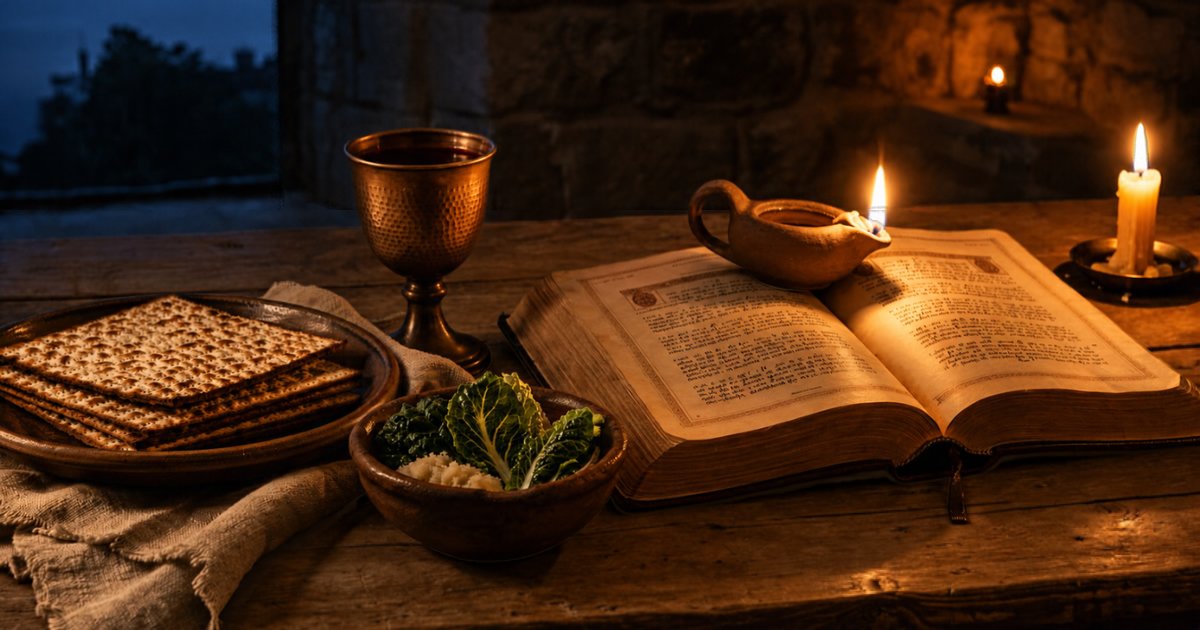
    • Host a simple Passover meal. Unleavened bread, a cup, and the story of how God delivered His people, and how Jesus fulfilled it.
    • Invite someone. That is the heart of the Me 2Too Challenge: take the first step toward someone.
    • Rethink October 31. Ask what you are celebrating and why.

    If you have not read it yet, my post on why I am not convinced Christians should celebrate Christmas covers the same question from the December side.

    Frequently Asked Questions

    What are God’s appointed times?

    They are the feasts God established in Leviticus 23: the weekly Sabbath, Passover, Unleavened Bread, Firstfruits, Pentecost, Trumpets, the Day of Atonement and Tabernacles. God calls them “my feasts” (Leviticus 23:2).

    Why don’t most Christians celebrate Passover?

    Many churches follow tradition that goes back to the Council of Nicaea in A.D. 325, which separated the Easter date from the Jewish calendar. Over time, most of the Church stopped keeping Passover at all.

    Is Halloween a pagan holiday?

    Halloween traces back to the Celtic festival of Samhain. The church later placed All Saints’ Day on November 1, and the night before became All Hallows’ Eve, or Halloween.

    Should Christians keep the biblical feasts?

    I believe they should, because Jesus and the apostles kept them and Jesus fulfilled them. Believers disagree on this, so study Leviticus 23, the Gospels and Paul’s letters and decide before God.

    When is Passover in 2027?

    Passover 2027 begins at sundown on Wednesday, April 21, 2027.

    Where Do You Stand?

    Did your church celebrate Halloween this year? Has it ever kept a Passover? Tell me in the comments. I want to hear from you, even if you see it differently. And if this got you thinking, share it with one person and study Leviticus 23 together.

    Keep reading: God’s appointed times start with the weekly Sabbath. Read The Narrow Path Has a Seventh Day: Why the Church Can’t Move God’s Sabbath.

  • The True History of Thanksgiving and Why I Don’t Celebrate It

    The True History of Thanksgiving and Why I Don’t Celebrate It

    Most of us learned the true history of Thanksgiving from a construction-paper cutout: Pilgrims in buckle hats, friendly Indians, a turkey, and a pumpkin pie. One peaceful meal, and a nation was born grateful.

    The real story is different. And when I hold it up next to the Word of God, and next to what I watch happen in my own city every November, I can’t celebrate it anymore. Here is why.

    At a Glance

    1621A 3-day harvest meal, not a holiday
    1637Thanksgiving declared after the Pequot massacre
    God’s harvest feastThe Feast of Tabernacles (Lev. 23:39)
    Who God invitesStranger, fatherless and widow
    $58.63Basic 2026 dinner for 10, up 6%

    What Really Happened in 1621

    The 1621 gathering at Plymouth was a harvest celebration, not a holiday. Our main eyewitness record is one short passage by colonist Edward Winslow. He wrote that the Wampanoag leader Massasoit arrived “with some ninety men,” and that they stayed and feasted for three days. Historians now say the Wampanoag were likely not invited at first. One account holds that Massasoit came with his warriors after hearing gunfire, expecting a fight, and found a feast instead.

    Even the menu we copy every year is mostly myth. The Wampanoag brought five deer. Potatoes and pumpkin pie were not on the table, and Winslow never mentions turkey.

    It wasn’t called Thanksgiving, either. The first recorded religious day of thanksgiving in Plymouth came two years later, in 1623, to mark the end of a drought.

    The Thanksgiving Nobody Teaches: 1637

    Sixteen years later, the story turned dark. On May 26, 1637, colonial militia and their Native allies surrounded a fortified Pequot village near the Mystic River in Connecticut and set it on fire. Some 700 Pequots, including women and children, were killed. Most survivors of the war were later sold into slavery.

    Afterward, the leaders of Massachusetts Bay called for a day of thanksgiving in the churches for their victory over the Pequots. Historians debate how much that day connects to the holiday we keep now. But it shows what “thanksgiving” meant to the people who wrote our holiday’s origin story: thanking God for the destruction of their neighbors.

    That is why, since 1970, many Native people gather at the statue of Massasoit in Plymouth every Thanksgiving Day to remember their ancestors. To them, it is a National Day of Mourning.

    How a Harvest Meal Became a National Holiday

    The holiday as we know it came much later. During the Civil War, in 1863, President Abraham Lincoln proclaimed a national day of thanksgiving after years of campaigning by magazine editor Sarah Josepha Hale. In 1941, Congress fixed it to the fourth Thursday of November. The cozy Pilgrim story was largely built in the 1800s to give the new holiday a founding myth.

    So the holiday was not given by God. It was proclaimed by men, dressed in a story that leaves out the hardest parts.

    Why I Don’t Celebrate Thanksgiving

    1. God Already Gave Us a Harvest Thanksgiving

    Here is what surprises most believers: God has His own harvest festival. It is called the Feast of Tabernacles, and it is one of God’s appointed times.

    “Also in the fifteenth day of the seventh month, when ye have gathered in the fruit of the land, ye shall keep a feast unto the LORD seven days.” Leviticus 23:39 (KJV)

    Seven days of rejoicing over the harvest, commanded by God, kept by Jesus (John 7), and promised to the nations in the age to come (Zechariah 14:16). We traded it for a Thursday set by Congress.

    2. Look at Who God’s Feast Includes

    This is the part that convicts me most. When God described His harvest feast, He named who sits at the table:

    “And thou shalt rejoice in thy feast, thou, and thy son, and thy daughter, and thy manservant, and thy maidservant, and the Levite, the stranger, and the fatherless, and the widow, that are within thy gates.” Deuteronomy 16:14 (KJV)

    The stranger. The fatherless. The widow. God’s thanksgiving was built around the people who have the least. Ours is built around how much we can eat.

    3. It Has Become a Feast of Gluttony

    I need to be honest about what I see here in Las Vegas every November. I watch some of the less fortunate people in our community spend everything they have on this one meal. The rent money. The light bill. The little bit that was supposed to last until the first of the month. All of it goes into one table, one day, because the culture says that is what a good family does.

    I am not saying this to look down on anyone. I am saying it because I love these families, and I see the pressure crushing them. Then Friday comes, and the stores open early to sell them more.

    The American Farm Bureau says a basic Thanksgiving dinner for 10 costs $58.63 this year, up 6% from 2025, with turkey driving most of the increase. That is the basic list. Most tables go far beyond it.

    Scripture is plain about where this road goes:

    “Be not among winebibbers; among riotous eaters of flesh: For the drunkard and the glutton shall come to poverty: and drowsiness shall clothe a man with rags.” Proverbs 23:20–21 (KJV)

    Paul warned about people “whose God is their belly” (Philippians 3:19, KJV). A holiday that sends struggling families into debt for a single meal is not thanksgiving. It is the opposite.

    4. Gratitude Was Never Meant for One Day a Year

    “In every thing give thanks: for this is the will of God in Christ Jesus concerning you” (1 Thessalonians 5:18, KJV). A believer’s thanks is daily. We do not need a government proclamation to tell us when to be grateful.

    What I Do Instead This Week

    • Feed someone who can’t pay you back. Take the money you would spend on a feast and bless a widow, a single mom, or a neighbor who is struggling.
    • Keep it simple. If my family eats together Thursday, it is an ordinary meal, not a spending event.
    • Skip Black Friday. Don’t let the stores turn gratitude into debt.
    • Mark the Feast of Tabernacles on next fall’s calendar and study Leviticus 23 and Deuteronomy 16 with your family.
    • Reach out first. Call the person you have been waiting on. That is the heart of the Me 2Too Challenge.

    If Your Family Celebrates Thanksgiving

    I am not writing this to shame anyone sitting down with family on Thursday. Romans 14 says each person should be fully persuaded in his own mind. I am sharing where I have been persuaded. If you celebrate, tell the true story at your table, keep it simple, and make room for the stranger, the fatherless and the widow. That is the part God cares about.

    This is the third post in my series on holidays and God’s calendar. Read why I am not convinced Christians should celebrate Christmas and why the Church keeps Halloween but not Passover.

    Frequently Asked Questions

    What is the true history of Thanksgiving?

    The 1621 Plymouth feast was a three-day harvest celebration attended by the Wampanoag leader Massasoit and about 90 men. It was not called Thanksgiving. In 1637, after the Mystic massacre of the Pequot, Massachusetts Bay held a day of thanksgiving for the victory. Lincoln made Thanksgiving a national holiday in 1863.

    Was turkey served at the first Thanksgiving?

    The eyewitness account does not mention turkey. It says the Wampanoag brought five deer. Potatoes and pumpkin pie were not on the table.

    What is the biblical harvest feast?

    The Feast of Tabernacles, a seven-day festival after the harvest (Leviticus 23:39–43). God told His people to include the stranger, the fatherless and the widow (Deuteronomy 16:14).

    Is it a sin to celebrate Thanksgiving?

    Believers disagree. I don’t celebrate it because of its history, because God already gave us a harvest feast, and because of the gluttony and debt it brings. Study it and be fully persuaded before God (Romans 14:5).

    Where Do You Stand?

    Did you learn the true history of Thanksgiving in school? Have you seen families go broke over one meal? Tell me in the comments. And if this hit home, share it with one person before Thursday.

    Keep reading: If you’re rethinking the holidays, start with the day God Himself blessed. Read The Narrow Path Has a Seventh Day: Why the Church Can’t Move God’s Sabbath.

  • Should Christians Celebrate Christmas? 5 Reasons I’m Not Convinced

    Should Christians Celebrate Christmas? 5 Reasons I’m Not Convinced

    Should Christians celebrate Christmas? I know how that question sounds in November, with the lights going up and the music already playing in every store in Las Vegas. I am not asking it to be a grinch. I am asking because I care more about following Jesus than following the calendar.

    Here is the honest truth: I am not convinced we should celebrate Christmas at all. I did not land here overnight, and I did not land here to judge anyone. These are the five reasons I keep coming back to.

    At a Glance

    Not commandedScripture never tells us to celebrate His birth
    Born in AvivLuke 2:8 points to spring, not December
    Pagan rootsWinter festivals shaped the date and customs
    $1.013 trillionProjected 2026 U.S. holiday sales
    Truth to kidsSanta sits beside our word about Jesus

    1. Scripture Never Tells Us to Celebrate His Birth

    Jesus gave His followers one clear instruction about remembering Him. At the Last Supper, He broke the bread and said:

    “This do in remembrance of me.” Luke 22:19 (KJV)

    Paul repeats it: when we eat the bread and drink the cup, “ye do shew the Lord’s death till he come” (1 Corinthians 11:26, KJV). We are told to remember His death. Nowhere in the New Testament do we see the apostles or the early church marking His birthday.

    If God wanted a feast for the birth of the Messiah, He knew how to command one. He gave Israel detailed appointed times in Leviticus 23. A birthday feast for Jesus is not on that list.

    2. He Was Born in the Month of Aviv, Not December

    The Bible never gives a date for the birth of Jesus. It does give clues, and none of them point to winter.

    “And there were in the same country shepherds abiding in the field, keeping watch over their flock by night.” Luke 2:8 (KJV)

    Shepherds living outdoors with their flocks at night fits the warmer months better than the cold, rainy winter in Judea. The Biblical Archaeology Society notes that Luke’s shepherds might suggest the spring lambing season, while in December the sheep might well have been corralled. The same article points out that late-second-century Christians in Egypt recorded traditions placing His birth in the spring, around April 20 or 21.

    That is why I believe Jesus was born in Aviv, the spring month God called “the beginning of months” for Israel (Exodus 12:2) and the month He brought His people out of Egypt (Exodus 13:4). The Lamb of God arriving in the season of lambs and of Passover fits the pattern of Scripture.

    Bible scholars do not all agree on the season, and you should study it for yourself. But I am confident of this much: December 25 is not a date the Bible gives us.

    3. The December 25 Date and Customs Have Pagan Roots

    The Roman world was full of winter festivals. Saturnalia, a feast of gifts and partying for the god Saturn, ran in mid to late December. A Roman calendar from A.D. 354 lists December 25 as the birthday of Sol Invictus, the “Unconquered Sun.”

    Historians still argue about whether the church picked December 25 to replace those festivals. National Geographic notes that Saturnalia ended by December 23, and that early Christian writers explaining the date did not mention it. Some scholars argue the date came from early Christian calculations, not pagan ones. I want to be fair about that.

    But the customs are harder to defend. Evergreen trees, mistletoe, gift-giving feasts, and the season itself came out of winter traditions that had nothing to do with the God of Israel. God warned His people about exactly this kind of borrowing:

    “Take heed to thyself that thou be not snared by following them… and that thou enquire not after their gods, saying, How did these nations serve their gods? even so will I do likewise. Thou shalt not do so unto the LORD thy God.” Deuteronomy 12:30–31 (KJV)

    Good intentions do not make a borrowed tradition holy.

    4. Commercialism Has Swallowed the Season

    The National Retail Federation forecasts U.S. holiday retail sales in November and December 2026 will reach $1.013 trillion. That is more than a trillion dollars in two months.

    I am a marketer. I know how that machine works, and I help businesses compete in it. That is exactly why I can see it clearly. For millions of families, the season means debt, stress, and pressure to buy love in a box. Then January arrives with the bills. Jesus said, “Ye cannot serve God and mammon” (Matthew 6:24, KJV). December tests that more than any other month.

    5. Santa Teaches Our Kids Something Untrue

    We tell children a man sees them when they are sleeping, knows when they are awake, and rewards them for being good. Then one day they find out it was never true.

    What happens when those same kids hear us talk about a God they cannot see, who knows their hearts? I do not want my word about Jesus to sit on the same shelf as my word about Santa. Children need to know that what their parents tell them is true.

    So What Do I Do in December?

    I do not hide from my neighbors or lecture my family at dinner. I still love people, give generously, and show up. I just do not need a December holiday to do it.

    Here is what I focus on instead:

    • Remember His death and resurrection, the way He told us to.
    • Give without a deadline. A gift in March means more because nobody expects it.
    • Reach out first. The holidays are lonely for a lot of people. That is the heart of the Me 2Too Challenge.
    • Study the appointed times God did give in Leviticus 23.

    If Your Family Celebrates Christmas

    I am not writing this to condemn you. Many sincere believers I love celebrate Christmas to honor Jesus. Romans 14 says each person should be fully persuaded in their own mind. I am sharing where I have been persuaded, and I am asking you to search the Scriptures for yourself.

    If your family does celebrate, keep the focus where it belongs and spend time together. My list of the best Christmas movies for family movie night is a good place to start. Yes, Die Hard is on it.

    Frequently Asked Questions

    Does the Bible say when Jesus was born?

    No. The Bible does not give a date. Clues like the shepherds in the fields at night (Luke 2:8) point many readers to a warmer season, and I believe He was born in the spring month of Aviv.

    Is it a sin for Christians to celebrate Christmas?

    Believers disagree. I am not convinced Christians should celebrate it, for the reasons above, but Romans 14 calls each of us to be fully persuaded in our own mind. Study it and decide before God.

    Is Christmas based on a pagan holiday?

    Historians debate whether December 25 was chosen to replace Roman festivals like Sol Invictus. Many Christmas customs do trace back to pre-Christian winter traditions.

    What did Jesus tell us to remember?

    His death. At the Last Supper He said, “This do in remembrance of me” (Luke 22:19).

    Where Do You Stand?

    I would rather have an honest conversation than a quiet disagreement. Do you celebrate Christmas? Have you ever questioned it? Tell me in the comments. If this made you think, share it with one person and talk it over together.

    Keep reading: Christmas isn’t the only place tradition has replaced Scripture. Read The Narrow Path Has a Seventh Day: Why the Church Can’t Move God’s Sabbath.